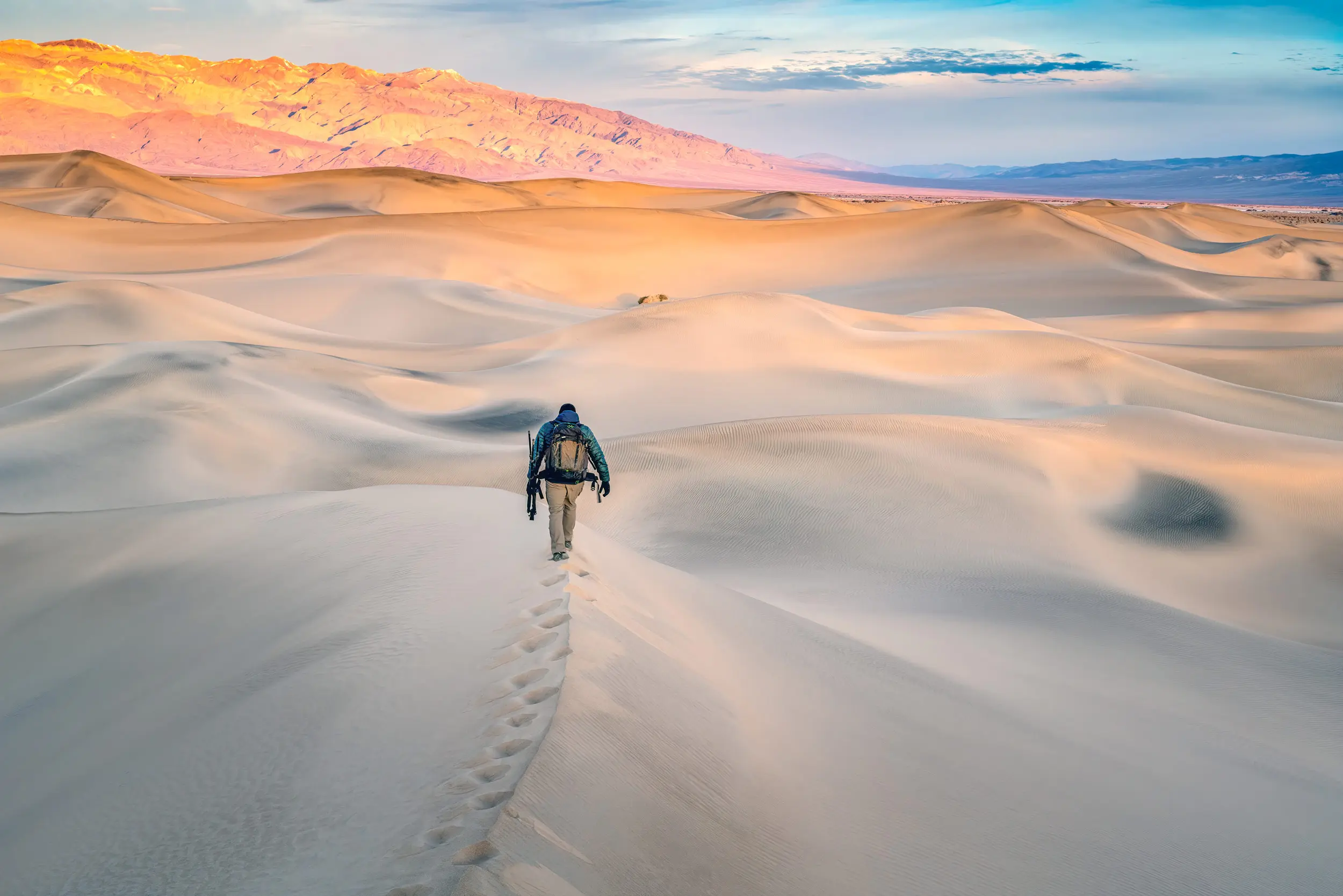
Imagine a place called “Death Valley” and you might picture an impossibly hot, lonely desert with nothing but tumbleweeds and sun-bleached bones. But don’t let the name fool you… Despite receiving less than 2 inches of rain a year, this extreme environment is home to a thriving community of animals that have adapted to the harsh conditions. Our park is a haven for over 300 bird species, 51 mammal species, 36 reptile species, and even a handful of amphibians and fish. (Header Photo Credit NPS / Kurt Moses)
So, how do these animals survive in this extreme desert? Well, in the animal kingdom, there are two main types of critters: those who love the sunshine (diurnal) and those who prefer moonlight (nocturnal). These fancy words come from Latin, with “diurnal” meaning “of the day” and “nocturnal” meaning “of the night.” It’s like nature’s very own day shift and night shift!

Mesquite Flat Sand Dunes (NPS)
Let’s start with the night shift crew. Many Death Valley animals are nocturnal, which means they come out when it’s cooler at night. These nighttime explorers have super cool adaptations to help them navigate in the dark and stay comfortable. For example, coyotes and jackrabbits have amazing night vision and super-sensitive hearing that helps them find food or avoid becoming someone else’s dinner.
But what about the daytime crew? Some brave animals have adapted to face the blazing sun head-on. Take the roadrunner, for instance. This speedy bird has a secret weapon against the heat — its body temperature is naturally high, around 104°F (40°C)! This helps the roadrunner stay active even when it’s super hot outside.
Not all Death Valley animals are strict night owls or early birds. Some, like the sidewinder rattlesnake and scorpion, can be active during both day and night. These adaptable creatures have found ways to survive in the extreme desert conditions, no matter what time it is. Now, let’s explore some of the incredible animals that have adapted to survive in one of the hottest places on our planet.

Desert Bighorn Sheep (NPS)
First up, we have the desert bighorn sheep, the ultimate rock climbers of Death Valley. These agile animals have concave, elastic hooves that allow them to traverse steep, rocky terrain. This skill offers protection against predators who can’t follow them up the cliffs. What’s truly amazing is their ability to go without water for weeks or even months! These hardy sheep can lose up to 30% of their body weight and still survive. They draw moisture from plants they eat and from water that pools temporarily on rocks after rain. When water becomes available again, they can drink several gallons at a time to rehydrate.
Fun fact: The horns of a ram are called “curls” and can weigh up to 30 pounds.

Mojave Desert Tortoise (NPS)
The Mojave desert tortoise is another incredible desert dweller. These slow-moving reptiles have mastered the art of avoiding the heat by spending up to 95% of their lives underground. They only come out when the weather is just right, which might be for only three months of the year. During the hottest times, tortoises estivate, entering a state of dormancy to conserve energy and save water. They also hibernate to survive frigid winter temperatures. These patient creatures can live for 30 to 50 years in the wild, with some reaching over 80 years old.
Fun fact: A common way tortoises defend themselves is to empty their bladder if they are picked up or handled. This is why we don’t pick up tortoises — it could lead to their death if they can’t find water soon and become dehydrated.

Roadrunner (NPS)
Zooming across the desert landscape, we spot the roadrunner — and no, it’s not being chased by a coyote! This speedy bird can outrun a human, reaching speeds of up to 20 miles (32 km) per hour. Measuring two feet (61 cm) in length at most and weighing less than a pound (0.45 kg), the roadrunner has a high body temperature (104°F, 40°C) that protects it from the consequences of heat. Roadrunners can also lower their body temperature to conserve energy during cold desert nights and expose dark patches of skin on their back to the sun to warm up again. While roadrunners are fun to spot, it’s best to admire them from afar. Chasing or disturbing wildlife can stress animals and disrupt their natural behavior.
Fun Fact: This quick-thinking bird has earned the nickname “snake killer” for its ability to outsmart and eat rattlesnakes.

Kangaroo Rat (NPS)
Now, let’s meet the kangaroo rat, a tiny creature with some big surprises. These little guys are so well-adapted to the desert that they never need to drink water their entire lives! They get all the moisture they need from the seeds they eat. Kangaroo rats conserve their body’s precious water by releasing wastes in very concentrated urine and dry feces. Because of their small size, these resilient rodents face many predators in the harsh desert environment. However, they’ve developed impressive survival skills to outsmart their hunters. With their super-hearing, they can even detect the silent approach of an owl. And if danger gets too close, they can leap up to 9 feet (2.7m) in a single bound to escape predators.
Fun fact: These rodents have built-in “backpacks” on their faces — cheek pouches used for transporting seeds back to their homes.

Desert Cottontail (NPS / Andrew Kung)
Hopping along the desert floor, we find the desert cottontail rabbit. These cute critters have a secret weapon against the heat — their enormous ears. Their ears make up 14% of their body size and help them hear predators from a distance. When it gets too hot, warm blood from the rabbit’s core circulates through blood vessels in its ears, releasing body heat into the surrounding air. In open-desert areas, they can withstand extremely high temperatures of around 113°F (45°C) for short periods!
Fun fact: The desert cottontail is so good at getting moisture from plants and dew that they rarely need to take a drink.

Devils Hole Pupfish (NPS / Olin Feuerbacher)
Last but not least, we dive into the warm waters of Devils Hole to meet the Devils Hole pupfish. These tiny blue fish, barely an inch long, are some of the rarest in the world. They live in 93-degree waters (34°C) that would be too hot for most other fish, but these little swimmers have adapted to thrive in these toasty conditions. Devils Hole’s water temperatures and oxygen concentrations are lethal for most other fish in the world, but the Devils Hole pupfish have survived and adapted to these harsh conditions for thousands of years. Still, the Devils Hole pupfish is critically endangered, and the area around its habitat is protected. Visitors should respect restricted areas to help preserve this rare species for future generations.
Fun Fact: Back when Congress passed the Endangered Species Act in 1966, these little fish made history as the first species to be officially listed as endangered in the United States!

(NPS / Kurt Moses)
From the rocky cliffs to the desert floor and even in warm underground pools, Death Valley is home to some truly remarkable animals. Each one has found unique ways to beat the heat and survive in this challenging environment. So when you visit Death Valley, keep your eyes peeled for these amazing desert dwellers — they might just surprise you with their incredible adaptations!
Remember to keep a respectful distance and avoid chasing or disturbing wildlife, as this can stress animals and disrupt their natural behavior. Feeding animals may seem like a kind gesture, but it can harm them by making them dependent on human food, which isn’t healthy and can lead to dangerous encounters. By admiring these animals from afar, we help ensure they stay safe and healthy in their natural habitat.
Did you know that the National Park Service has a special program for fourth graders, granting free access to Park Service sites for students and their families? More information on this national initiative can be found on the Every Kid Outdoors website.